
Read More
 By Santo Rabidas
  Published 2026-07-25 05:21:22
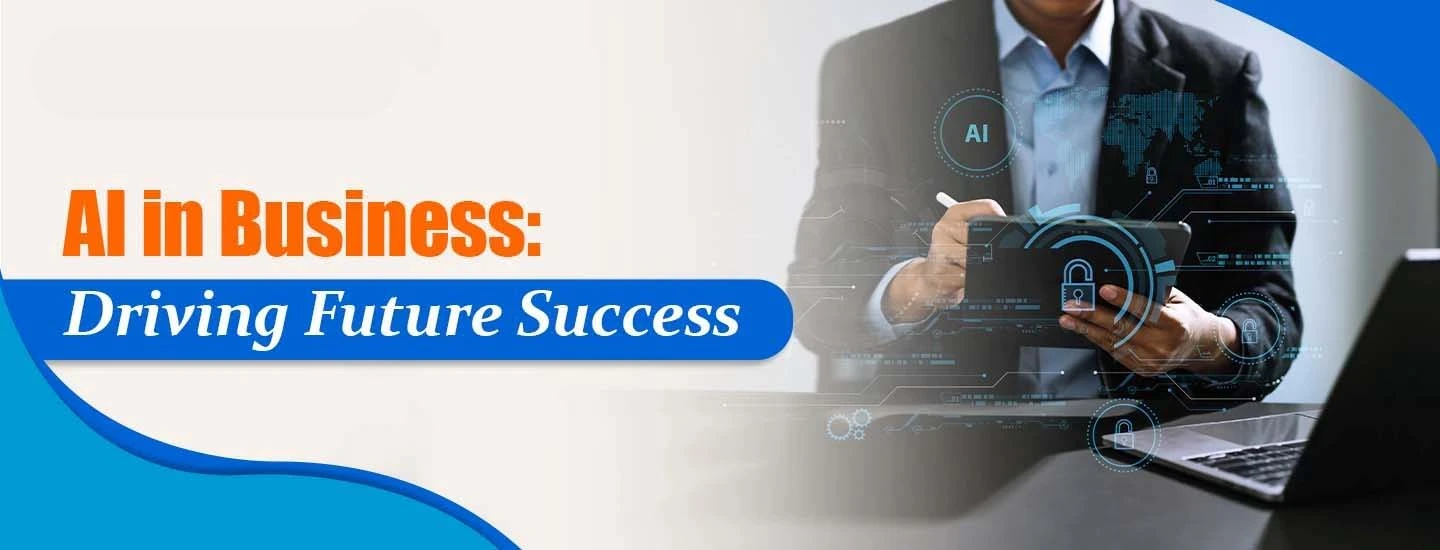
An integration of AI in business in the modern competitive market is essential for growth. It has become a necessity for the development of your company. It helps companies to operate intelligently, predict trends, and create unique personalized services. Businesses that ignore this transformation can lose their positions forever. This means artificial intelligence transforms the way industries compete. This also safeguards your market share, scales your operations, and outpaces the competition. In this blog, you will get to know why AI is no longer optional.
AI in business is a term used for using artificial intelligence technologies like machine learning, generative AI, and natural language processing. It is used to automate workflows, optimize operations, and improve decision-making to streamline business operations. Modern AI is based on learning and recognising patterns rather than traditional software. However, it can refer to either the incorporation of AI technologies in the existing businesses' operations or to businesses that create products based on AI technologies.
Listed below are the benefits of AI in business:
Operational Efficiency
Artificial Intelligence revolutionizes the way as business operates. This is because it helps to run tasks that take up a lot of time. The repetitive tasks include data entry, scheduling, and workflow management. Therefore, companies can increase their daily productivity with their human employees focusing on more productive processes such as strategic thinking.
Cost Reduction
The implementation of intelligent automation reduces standard operational costs by improving manual workflows. The accurate and efficient process helps avoid any wastage of money due to human mistakes. This enables the increasing companies to manage more output volumes without increasing costs due to the increased manpower requirements.
Enhanced Decision-Making
AI becomes an effective analytics system that analyzes a larger amount of data. This also helps to identify consumer behaviour and trends on the market. It avoids the risk of guesswork because AI provides operational indicators and predictive analysis for the leadership teams. Companies are able to apply data-driven insights to create precise forecasts, supply chains, and market strategies.
Improved Customer Experience
Modern AI delivers effective and all-time multilingual support and product recommendations through advanced virtual assistants. This is done through analysing data of users to provide personalised product recommendations. Easy and quick communication improves customer satisfaction, boosts user engagement, and helps build lasting brand loyalty.
Risk Management and Security
AI platforms monitor the digital networks for unusual activity or cybersecurity threats to give comprehensive organisational protection. In the case of physical or industrial settings, dedicated machines use specific algorithms that analyze the results of sensor diagnostics to accurately predict equipment failures. This helps to reduce the catastrophic system downtime, ensures operational continuity and catastrophic system downtime.
Enhances Customer Experience
AI-powered chatbots, virtual assistants, and personalised recommendations allow businesses to give quicker and more relevant assistance to customers. This will give quick responses, personalised services, and improve the overall experience of the customers.
Supports Business Growth and Innovation
The usage of AI can help businesses identify new opportunities that are available in the market. It is done through identifying market trends, customer preferences, and business performance. It also promotes innovation and assists in creating new business models, products, and services.
Strengthens Business Competitiveness
Businesses that use AI help to respond to the changes in the market. This also improves efficiency and gives good customer experiences. A good plan for using AI helps organizations stay competitive and ready for future technology improvements.
Here is the reason that businesses need an AI business strategy:
Aligns AI with Business Goals
An AI business strategy confirms that AI is used for solving business problems rather than implementing technology trends. In such a strategy, businesses will be able to identify the area of operations that needs improvement, increase revenue, or improve customer satisfaction through the application of AI technologies.
Improves Productivity and Efficiency
AI technologies will be able to automate repetitive tasks like data entry, customer support, scheduling, and document processing. It eliminates manual work and saves time. Employees can rely on valuable and creative tasks. Thus, a business will become more efficient.
Reduces Business Risks
Improper planning before implementing artificial intelligence may lead to risks regarding privacy, security, and compliance. The AI strategy offers guidance for responsible AI use, protects sensitive business and customer data, and ensures compliance with applicable regulations.
Optimizes Business Costs
By adopting this strategy, businesses will be able to invest their funds towards buying the correct AI tools and technologies. This helps to reduce implementation costs, avoids wasted resources, and improves return on investment (ROI).
Encourages Innovation
Businesses that use AI can experiment with new products, services, and business models. They also adapt to new market needs and stay competitive in a competitive business environment.
Prepares Businesses for Future Growth
The technology of AI is continuously advancing. Companies that have developed an AI strategy can adopt new advancements, scale their operations and be competitive in the future.
An AI in business is not an option in reality, but it is an essential part of business. Companies can improve productivity, make better choices, give a better experience to customers, and remain competitive in a rapidly changing market through the utilisation of AI. There is a development of AI technologies for the long-term growth, innovation, and success of a company. Investment in AI helps build a stronger and more sustainable future for businesses.
Q1. What is AI in business?
In a business environment, AI consists of using smart software and machines that can automate daily tasks, analyze large amounts of data, and interact with customers. Examples can include answering website questions with automated chat and using software for auto-writing of emails or reports.
Q2. Why is AI important for businesses?
AI is important because it changes data into useful information. This data can be used to make decisions. Businesses can use the history of sales and market trends. It also helps companies to remain more competitive.
Q3. How can AI help a business grow?
A company will be able to find new ways of earning and reaching out to potential customers through the use of AI.
Q4. Is AI necessary for small businesses?
AI is not necessary for small businesses, but it is required to run a business and stay competitive. AI tools can allow small teams to compete with large companies. This is done by providing full-time customer service, bookkeeping, marketing and other tasks.
Q5. How does AI improve business productivity?
AI automates repetitive tasks, analyzes large amounts of data, and improves decision-making to improve productivity in business. It handles the routine tasks and allows human employees to focus on creative and strategic goals.
Q6. What are the benefits of AI in business?
Q7. How do companies use AI today?
Companies are using AI today as a digital employee to speed up operations, cut costs and complete repetitive tasks.
Q8. Which industries benefit the most from AI?
Industries that deal with large amounts of data, customer interactions, and complex supply chains benefit from AI.
The industries include:
Q9. How can AI reduce business costs?
AI automates routine, manual tasks, reduces heavy human errors, and optimizing resource allocation to reduce business costs.